Industries that move abrasive materials face a persistent problem: pipes that wear out too fast, force unplanned shutdowns, and drain maintenance budgets. Mining operations, cement producers, and bulk material handlers all deal with pipe failure driven by continuous abrasive contact. Hardox® 400 pipes offer a direct solution. Manufactured from SSAB Sweden’s Hardox® 400 wear-resistant steel, they deliver 400 HBW hardness with the toughness and weldability needed for demanding industrial environments.
What are Hardox® 400 Pipes?
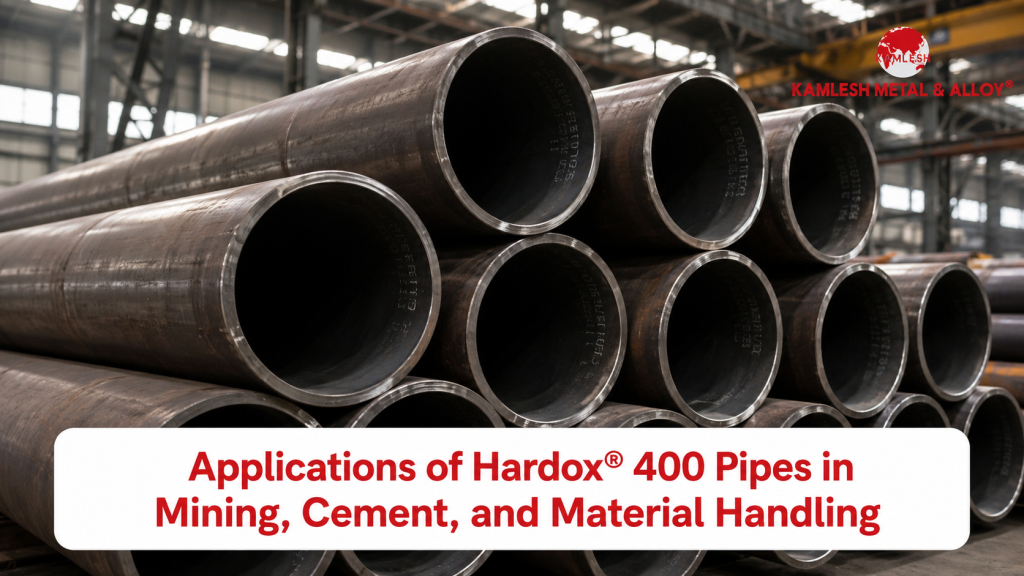
Hardox® 400 pipes are steel pipes fabricated from Hardox® 400 plate, carrying a nominal hardness of 400 HBW through the full wall thickness. Unlike surface-hardened pipes that soften as they wear, Hardox® 400 maintains its abrasion resistance all the way through.
The Hardox® 400 chemical composition controls carbon, manganese, silicon, chromium, nickel, and molybdenum to achieve this through-hardness without compromising weldability. That combination makes them practical for industrial fabrication. When compared to Hardox® 400 equivalent material options on the market, few alternatives match the same balance of hardness, toughness, and documented traceability. Mining, cement production, power generation, ash handling, and bulk terminal operations all specify these pipes where conventional carbon steel fails prematurely.
Key Properties of Hardox® 400 Pipes
Superior Abrasion Resistance: Hardox® 400 pipes outperform mild steel pipes against sharp, angular particles including quartz-bearing slurries, crushed limestone, and fly ash. The hardness holds through the full wall.
High Impact Strength: Rock fragments above 50 mm, pressure surges, and pneumatic conveying cycles all generate impact stress. Hardox® 400 absorbs these loads without cracking, which carbon steel pipes at similar wall thickness cannot reliably do.
Extended Service Life: In comparable abrasive applications, Hardox® 400 pipes last two to four times longer than carbon steel equivalents, cutting replacement frequency and the associated shutdown costs.
Good Fabrication and Weldability: Standard welding procedures apply. On-site modifications including bends, tees, and reducers require no exotic consumables or complex pre-heat regimes, keeping fabrication costs practical.
Lower Maintenance Costs: Lower wear failures mean lower labor costs, no emergency parts ordering, and no unplanned downtime. The total cost of ownership over a three to five year period always favors Hardox® 400 for high wear applications.
Reliable Performance in Harsh Environments: Dry abrasive flow at high velocities, wet slurry under pressure, and 24-hour pneumatic cycling all fall within the operating envelope these pipes handle without degradation.
Applications of Hardox® 400 Pipes in Mining
Slurry Transportation Systems: Iron ore, copper concentrate and phosphate slurries at 1.5 to 4 m/sec erode conventional pipe interiors rapidly. Hardox® 400 pipes cut wall-loss rates in these slurry lines, extending maintenance intervals on long-distance pipelines.
Ore and Tailings Conveyance: Angular rock particles in ore transfer and tailings conveyance create groove-wear that standard pipes cannot resist beyond a few months. Hardox® 400 holds up through the full transfer cycle.
Mine Dewatering Systems: Underground dewatering lines carry grit-laden groundwater rather than clean water. Hardox® 400 resists the combined erosive action of mineral fines and sustained water flow across long discharge runs.
Pneumatic Conveying Lines: Dry mineral powders conveyed at velocities above 20 m/s impact pipe bends at high energy. Hardox® 400 elbow sections eliminate the monthly replacement cycle that standard steel bends require in these lines.
Processing Plant Piping Networks: Reagent slurries, concentrate streams, and solids-laden process water all contact pipe walls continuously inside processing plants. Hardox® 400 piping networks keep these circuits running between planned shutdowns rather than forcing reactive maintenance.
Applications in the Cement Industry
Raw Material Conveying Systems: Limestone carries a Mohs hardness of 3, enough to wear conventional pipes at contact points within 6 to 12 months. In typical raw material circuits, Hardox® 400 pipes double the replacement interval to more than 24 months, reducing the annual costs for purchasing pipes.
Cement Powder Transfer Lines: Fine cement powder moving between silos and packaging lines at high velocity distributes abrasive contact evenly across the pipe wall. Hardox® 400 maintains wall integrity through this continuous fine-particle flow far longer than carbon steel alternatives.
Kiln Feed Systems: Silica content in the raw meal is pneumatically conveyed to the kiln preheater and causes gradual erosion of the pipe interiors. Hardox® 400 pipes are used to combat silica-induced wear throughout the entire kiln feed circuit.
Dust Collection and Pneumatic Systems: The high velocity fine airborne cement dust is transferred through return ducts to baghouse filters and electrostatic precipitators. Hardox® 400 sections in these dust return lines outlast mild steel ductwork by a significant margin.
Applications in Material Handling Industries
Bulk Material Conveying: Coal terminals, sand quarries, and aggregate processors move materials ranging from fine dust to 75 mm chunks through pipe conveying systems. Hardox® 400 handles both fine erosion and coarse impact gouging, eliminating the three-month inspection cycles that conventional pipe demands.
Pneumatic Transport Systems: Abrasive fertilizers, mineral-coated grain and industrial sand increase pipe wear in pneumatic transport networks. Hardox® 400 pipes prevent the premature elbow failures and straight-section thinning that interrupt production in these facilities.
Recycling Plants: Shredded metal, crushed glass, and demolition waste combine sharp edges, irregular shapes, and impact force. Hardox® 400 resists the gouging that shredded metal fragments inflict on pipe interiors, extending service intervals in recycling conveying circuits.
Industrial Loading and Unloading Systems: Port terminals and rail unloading facilities cycle transform materials in bulk through pipe networks many times in a day. Hardox® 400 pipes sustain this repetitive contact load without the progressive wear that forces conventional pipe replacement after 6 to 9 months.
Benefits of Using Hardox® 400 Pipes
Hardox® 400 pipes provide longer equipment life, reduced maintenance labor and fewer production interruptions versus standard carbon steel. Wall-thickness retention under abrasive service keeps pipe systems within pressure and flow specifications for longer, avoiding the performance loss that thinned conventional pipes cause. Over a five-year horizon, total cost of ownership in high-wear applications consistently falls below the cost of cycling through multiple sets of cheaper pipe.
Factors to Consider When Selecting Hardox® 400 Pipes
Match pipe selection to the specific application. Particle hardness and slurry concentration determine wall thickness requirements. Flow velocities over 3 m/s in slurry service require a heavier wall than gravity fed systems at lower velocities. Check outer diameter and pressure rating against system design before ordering. Check welding procedure documentation for any site fabrication. Make sure your supplier gives you the full mill certificates with traceable heat numbers.
Quick Hardox® Pipe Selection Checklist:
- Abrasion level: low, medium, or high based on particle hardness and velocity
- Pipe size: outer diameter and wall thickness matched to flow and pressure
- Material thickness: based on expected wear rate and service interval target
- Operating environment: wet slurry, dry pneumatic, or combined service
- Certification requirements: mill certificates, pressure test records, traceability
How to Choose the Right Hardox® 400 Pipe Supplier
Prioritize material authenticity. Genuine Hardox® 400 pipes carry SSAB mill certificates with traceable heat numbers; suppliers who cannot provide these documents are selling unverified material. Look for custom cutting, end preparation, and flanging capabilities to reduce on-site fabrication costs. Hardness verification and dimensional checks before dispatch prevent specification issues from reaching the site. Kamlesh Metal & Alloy, India’s sole authorized distributor for SSAB Sweden’s Hardox® and Strenx range since 1970, operates under ISO 9001:2015 certification with documented incoming inspection and full material traceability on every order.
Conclusion
Hardox® 400 pipes cut through the core problem in mining, cement production, and material handling: abrasive wear that destroys conventional pipelines faster than budgets allow. At 400 HBW hardness with practical weldability and through-wall abrasion resistance, they deliver two to four times the service life of carbon steel alternatives in comparable applications. Reduced downtime, lower maintenance spend and sustained flow performance make the lifecycle cost argument clear.
Contact Kamlesh Metal & Alloy for certified Hardox® 400 pipes with full SSAB traceability and same-day quotation on standard and custom specifications.