Choosing the wrong plate grade shows up years later, in fatigue cracks or excess dead weight nobody budgeted for. Structural fabricators and equipment builders face the same fork on nearly every project: high strength steel plate or mild steel plate. Strength, durability, and fabrication behavior differ enough between the two that the choice shapes safety margins, structure weight, and total project cost.
Understanding High Strength Steel Plate and Mild Steel Plate
Both grades serve structural and industrial work, but they sit at different points on the strength and ductility scale. Matching the grade to the application avoids both under-engineering a load-bearing part and overpaying for strength a lighter-duty job never needs.
What Is a High Strength Steel Plate?
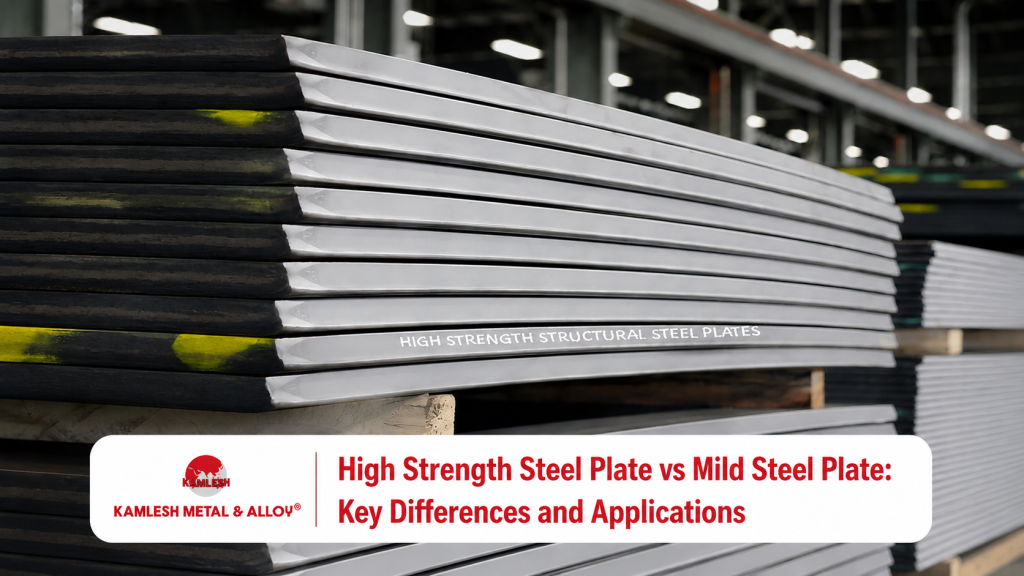
High strength steel plate reaches yield strengths well above standard structural steel, with grades such as S960QL delivering a minimum yield of 960 MPa through a quench-and-temper production process that builds in toughness alongside that strength.
What Is a Mild Steel Plate?
Mild steel plate carries lower carbon content and a correspondingly lower yield strength, but that composition gives it strong weldability and formability, which is why it remains the default choice for general fabrication.
High Strength Steel Plate vs Mild Steel Plate: Key Differences
The two grades diverge most in load capacity, weight efficiency, and long-term cost, not in basic availability or shape options.
Mechanical Strength and Load-Bearing Capacity
High strength grades carry substantially higher yield and tensile values, letting a thinner section carry the same load a thicker mild steel plate would need.
Weight and Structural Efficiency
Because a high strength plate needs less material thickness to hit the same load rating, structures built with it weigh less overall, a direct benefit in mobile equipment where every kilogram affects payload.
Weldability and Fabrication
Mild steel welds and forms with fewer process controls. High strength grades need controlled heat input and matched filler metal to avoid softening the heat-affected zone during welding.
Corrosion Resistance and Surface Protection
Neither grade resists corrosion on its own; both need coating or painting in exposed service, though high strength plates tend toward thinner protective systems since less surface area carries each unit of load.
Wear Resistance and Service Life
Mild steel wears faster under abrasive contact. High strength grades, with their higher hardness, hold up longer under mechanical wear in demanding environments.
Cost and Lifecycle Value
Mild steel costs less per tonne upfront. High strength steel costs more initially but can lower lifecycle cost through reduced material use, lighter structures, and longer service intervals.
Applications of High Strength Steel Plate
High strength plate earns its place wherever load capacity per kilogram matters most.
1. High-strength steel plates support massive loads in modern infrastructure.
2. Mining machinery relies on high-strength plates for heavy impacts.
3. Vehicle manufacturing uses high-strength plates to boost payload capacity.
4. Heavy cranes use high strength plates to improve dynamic lifting.
Each of these applications carries heavy structural or dynamic loads where a lighter, stronger plate directly improves payload capacity or fuel efficiency.
Applications of Mild Steel Plate
Mild steel earns its place where fabrication ease and cost matter more than maximum strength.
1. General fabrication projects rely heavily on mild steel plates because they are exceptionally easy to weld cut and form into custom shapes.
2. Mild steel plates are extensively used in the structural framework of the construction sites for providing reliable load bearing support at low cost.
3. Mild steel plates are often used in the construction of storage tanks and industrial components to provide reliable fluid storage and structural durability.
4. The makers of agricultural and light engineering equipment prefer mild steel plates for manufacturing rugged low cost machinery parts which can bear the daily stress of the field.
These applications rarely push against strength limits, so mild steel’s lower cost and easier weldability make it the practical choice.
How to Choose the Right Steel Plate: Key Factors and Common Mistakes
Load and Structural Requirements
Select the plate grade based on the actual strength demand of the part, not on unit price alone, since underspecifying strength on a load-bearing component creates a safety risk.
Operating Environment
Account for wear, impact, and corrosive exposure at the selection stage. Overlooking service conditions is a common reason plates fail earlier than expected.
Fabrication and Manufacturing Needs
Confirm the shop’s welding, cutting, and forming capability matches the grade chosen, since high strength plates need process controls a mild steel job may not require.
Budget and Project Lifecycle
Weigh the upfront material cost against maintenance and replacement costs over the project’s service life, rather than selecting on initial price alone.
Benefits of Choosing a High Strength Steel Plate for Industrial Applications
1. Stronger on smaller gauge.
2. Higher efficiency of construction and lower total weight of structure.
3. For demanding service and high wear applications, heavier duty is required.
4. Longer service life, less maintenance.
5. Improved reliability for structural and transportable equipment applications in high demand situations.
Conclusion
The difference between high-strength steel plate and mild steel plate is on mechanical performance, fabrication requirements, and lifecycle cost. By taking into account the structural load, operational environment, and fabrication capabilities when choosing a material, not just the initial price, engineers and fabricators may choose the plate grade that will last for the life of the project.