Abrasive material handling wears through standard steel in months, not years. Mining chutes, cement mills, and coal handling systems all move rock, ore, and slag across steel surfaces that erode fast under constant particle contact. A chromium carbide plate solves this by fusing a hard, carbide-rich layer onto a steel backing, and understanding what actually drives that wear resistance helps engineers pick the right grade for the job instead of guessing.
What Is a Chromium Carbide Plate?
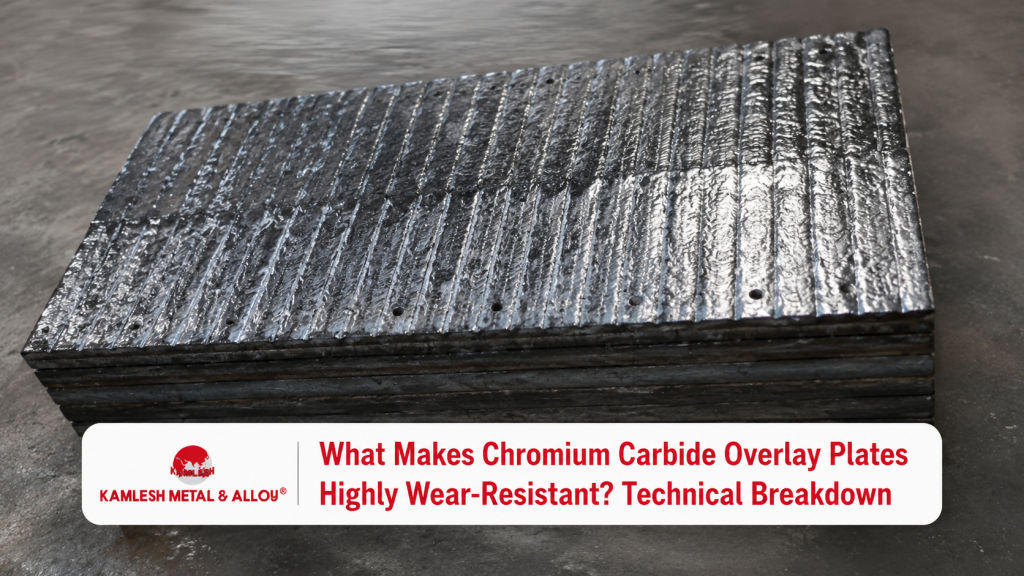
A chromium carbide overlay plate starts as a mild steel base plate, onto which weld overlay deposits a hardfacing layer rich in chromium carbides. The base plate handles structural loading and impact, while the overlay layer takes the direct abrasive contact. That division of duty separates overlay plates from solid hardened steel, which trades toughness for hardness rather than combining both.
Components of a Chromium Carbide Overlay Plate
- Base plate material, mild steel, for structural support
- Chromium carbide-rich overlay layer, the working wear surface
- A metallurgical bond fusing the two layers into a single plate
How Chromium Carbide Overlay Technology Creates High Wear Resistance
Overlay welding deposits a filler alloy rich in chromium and carbon onto the base plate. As the weld cools, chromium and carbon combine into hard carbide particles distributed through a softer metal matrix. Overall wear resistance depends on four things together: the overlay process, how evenly the carbides distribute, the surface hardness achieved, and the strength of the bond holding the overlay to the base.
Role of Chromium Carbides in Abrasion Resistance
Primary chromium-rich carbides can reach a hardness of 1,700 HK, well above the hardness of the abrasive particles they’re built to resist, which limits material loss as particles slide or impact across the surface.
Importance of the Metallurgical Bond
A strong fusion bond between overlay and base plate keeps the layers from separating under heavy-duty service. A weak bond lets the overlay delaminate under repeated impact, which defeats the purpose of the plate entirely.
High Surface Hardness
Hardness contributes directly to abrasion resistance. Typical chromium carbide overlays fall in the 1,700 to 3,000 HK range, depending on carbide type and volume fraction in the matrix.
Microstructure and Carbide Distribution
Carbides distributed evenly through the matrix, rather than clustered unevenly, wear down at a consistent rate across the plate surface, which extends usable service life before replacement.
Resistance to High-Stress Abrasion
Under continuous contact with heavy material flow, the carbide layer resists gouging and material loss even as tonnage moves across the surface hour after hour.
Impact Resistance and Structural Support
The steel backing plate absorbs impact energy that the harder, more brittle overlay layer cannot flex to handle on its own, balancing toughness against hardness in a single plate.
Industrial Applications Where Chromium Carbide Plates Deliver Maximum Performance
Industries moving abrasive bulk material benefit most from overlay wear protection.
- Chromium carbide plates are employed in mining and mineral processing operations on excavators, crushers and chutes to resist high ore abrasion.
- In cement production plants overlay plates are used in raw mill chutes, clinker hoppers and separator fans to avoid fast material wear.
- Power production stations overlay coal pulverizer housing slag pipes and ash handling ducts with plates for severe erosion.
- In steel factories, overlay wear plates are used in sinter plant chutes, blast furnace hoppers and skip cars to resist strong impact and heat.
- Bulk material handling equipment includes overlay plates at conveyor transfer points, bucket reclaimer liners and truck bodies to provide continuous operation.
Performance Advantages of Chromium Carbide Plates Compared to Conventional Wear Plates
- Longer Service Life: Premium chromium carbide overlay outlasts standard steel under severe abrasive wear
- Reduced Maintenance and Downtime: High wear resistance minimizes frequent plate replacements, keeping production lines running smoothly
- Improved Equipment Reliability: Superior toughness prevents unexpected component failures during high-impact material handling tasks
- Lower Lifecycle Operating Costs: Extended replacement cycles significantly reduce labor expenses and overall operational maintenance budgets
A carbide overlay plate outlasts plain steel plate under the same abrasive load by a wide margin, which cuts replacement frequency and the downtime that comes with each swap.
Factors That Influence the Wear Performance of Chromium Carbide Plates
- Thickness of Overlays
- Chromium Carbide Contain
- Operating Environment
- Build quality and installation
Thicker overlays and higher carbide content can help lengthen service life, but operating temperature and impact load all play a role in how long a particular plate will remain in the field. Poor fabrication, such as broken welds or uneven overlay application, shortens that life, regardless of grade selected.
How to Select the Right Chromium Carbide Plate for Your Application
Type of Abrasive Material
Consider particle size and hardness to select the ideal chromium carbide alloy matrix composition.
Impact Load Requirements
Evaluate mechanical shock levels to choose an appropriate substrate thickness preventing premature cracking failures.
Plate Thickness and Overlay Configuration
Match base metal and overlay pass thickness to your specific wear allowance operational needs.
Equipment Operating Conditions
Factor in working temperatures and corrosive exposure to ensure long-term structural integrity and performance.
Matching plate grade to the abrasive material, expected impact, and operating temperature prevents both under-protection and unnecessary overspending on a heavier grade than the application needs.
Conclusion
A chromium carbide plate resists wear because of how its overlay technology combines carbide hardness, even carbide distribution, a strong metallurgical bond, and a steel backing that absorbs impact. Choosing the proper grade of abrasive material, impact load, and operational environment can improve operation of material handling systems with less unexpected downtime, reduce maintenance costs, and increase equipment life.